10 Best Humane Mouse Traps
From leading brands and best sellers available on the web.By clicking on a link to a third party's website, log data is shared with that third party.
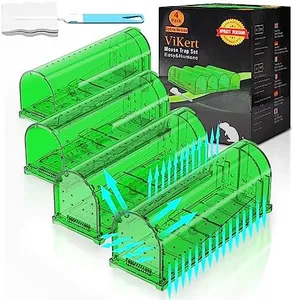
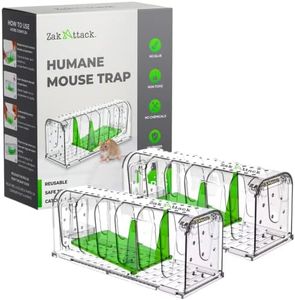
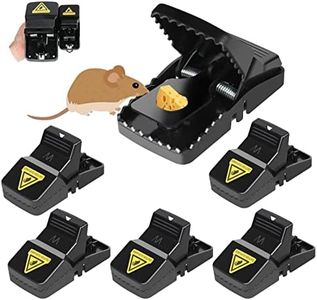
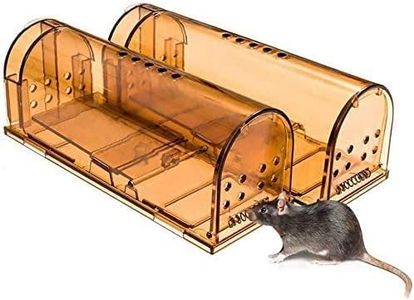
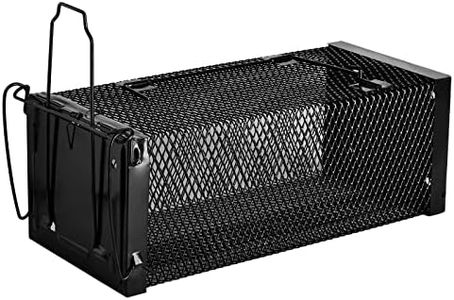
Related Products
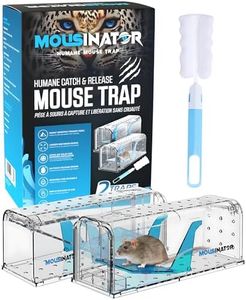
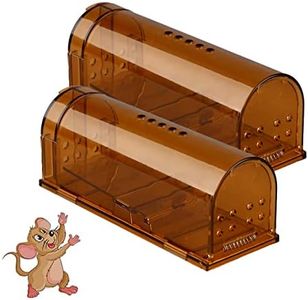

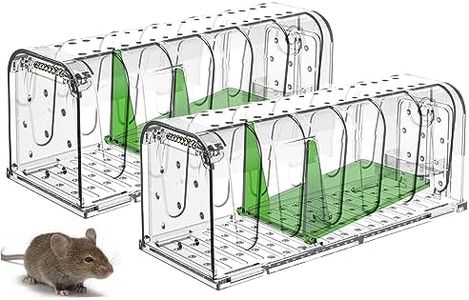


Buying Guide for the Best Humane Mouse Traps
Choosing a humane mouse trap is a thoughtful way to deal with unwanted rodents without causing them harm. The goal is to catch mice safely and release them back into the wild, so it's important to pick a trap that is effective, easy to use, and safe for both the mouse and the person handling it. When shopping for a humane mouse trap, you should consider how the trap works, how easy it is to set and clean, and whether it will fit in the spaces where you've seen mouse activity. Understanding the key features will help you select a trap that matches your needs and ensures a humane approach to pest control.Trap SizeTrap size refers to the physical dimensions of the trap and the space inside where the mouse will be held. This is important because a trap that's too small may not be comfortable or effective, while a trap that's too large might not fit in tight spaces where mice travel. Small traps are suitable for single mice and tight corners, while larger traps can accommodate multiple mice or larger rodents and are better for open areas. To pick the right size, consider where you plan to place the trap and whether you expect to catch more than one mouse at a time.
MaterialThe material of a humane mouse trap can be plastic, metal, or sometimes a combination of both. This matters because it affects durability, ease of cleaning, and visibility. Plastic traps are lightweight and often transparent, making it easy to see if a mouse has been caught, but they may not last as long. Metal traps are sturdier and can be reused many times, but they might be heavier and less see-through. Choose a material based on how often you plan to use the trap and whether you want to check the trap without opening it.
Ease of UseEase of use describes how simple it is to set up, bait, and release the trap. This is important because a complicated trap can be frustrating and may not work as intended. Some traps have simple doors that close when a mouse enters, while others require more steps to set. If you want a hassle-free experience, look for traps that are easy to open, bait, and clean, especially if you plan to check them frequently or if you’re new to using traps.
VentilationVentilation refers to the presence of holes or slots in the trap that allow air to flow inside. This is crucial for the well-being of the mouse while it is inside the trap, especially if you might not check the trap immediately. Traps with good ventilation keep the mouse comfortable and reduce stress. If you might leave the trap unattended for a few hours, make sure it has enough ventilation to keep the mouse safe until you can release it.
Release MechanismThe release mechanism is how you let the mouse out of the trap once it’s caught. This is important for both your safety and the mouse’s well-being. Some traps have simple sliding doors, while others require you to tilt or open a lid. If you prefer not to touch the mouse or want a quick release, look for a trap with a hands-free or easy-open mechanism. Consider your comfort level with handling the trap and how quickly you want to release the mouse.
Cleaning and ReusabilityCleaning and reusability refer to how easy it is to wash and reuse the trap after each catch. This matters because a clean trap is more effective and hygienic, and reusable traps are better for the environment. Some traps can be rinsed with water, while others may have parts that are harder to clean. If you plan to use the trap multiple times, choose one that is easy to take apart and wash, so you can keep it in good condition for future use.